The useful starting point
Approach condo charging as a governance, capacity, parking and operating project rather than an individual charger purchase.
Study common capacity and the charging task
Gather the building’s current electrical information through the authorized representative. The designer needs the supply arrangement, existing demand, relevant distribution and proposed charger use. An individual unit’s breaker spaces do not establish common-building capacity.
EPCOR’s EV charging guidance introduces energy-management concepts. In a condominium, the designer must assess the specific shared system and selected equipment. A household example does not automatically scale into a compliant multi-stall design.
Define the operating task: number of vehicles, ordinary parked hours, minimum useful charging experience and possible expansion. Make assumptions explicit so the board can compare options without promising every vehicle unrestricted maximum power.
Parking layout can drive the installation
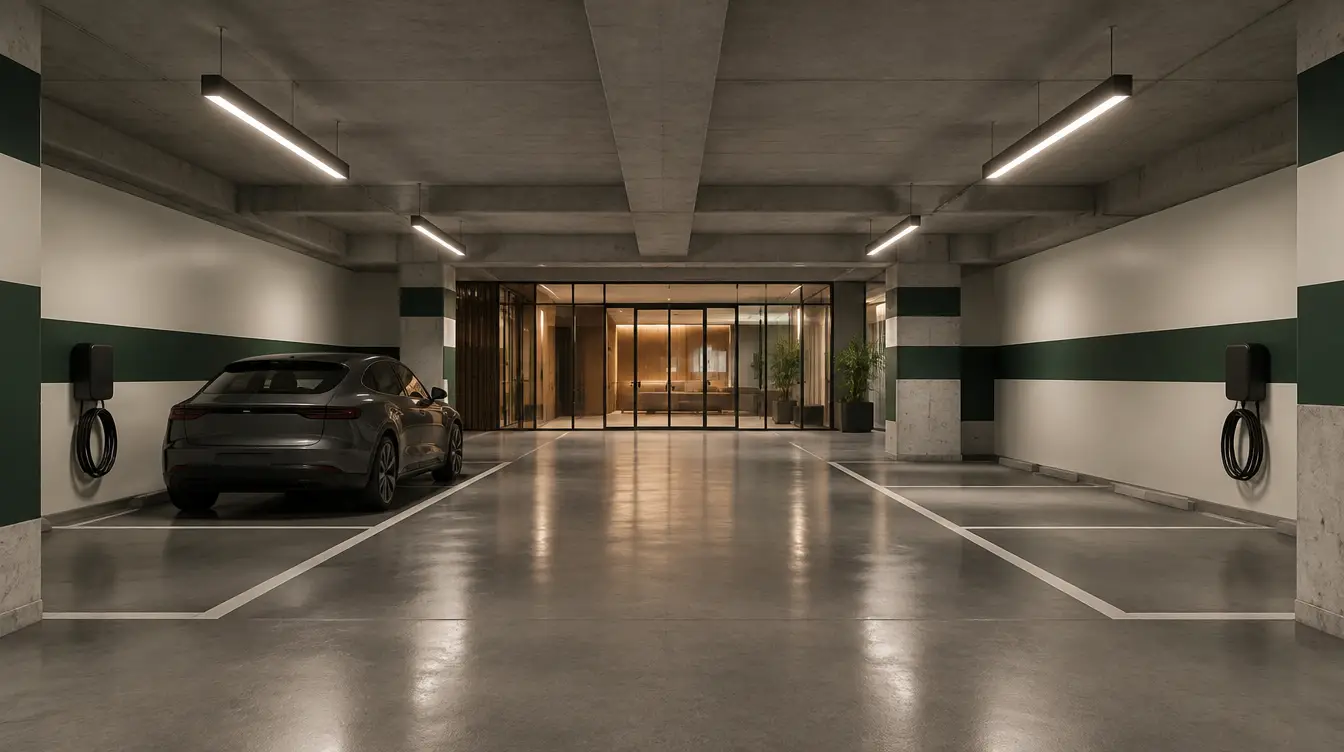
Map stalls, accessible routes, distribution equipment, vehicle circulation and proposed charger positions. Consider whether cable paths cross fire separations, finished spaces or other building systems. The appropriate professionals should coordinate those issues; a resident should not improvise a route from the nearest receptacle.
Ask the quotation to separate common infrastructure from stall-specific equipment. This makes the incremental cost of later expansion easier to understand and prevents every resident from receiving a different incomplete installation.
Identify how signage, impact protection, snow-clearing or garage maintenance interact with the equipment. Practical placement decisions matter alongside electrical calculations.
Define the operating rules before commissioning
Billing can mean energy reimbursement, usage-based fees or another approved arrangement. Discuss it with the corporation and relevant advisors. Do not assume a device’s billing feature satisfies every governance, measurement or account requirement.
Specify who administers user access and what happens when equipment loses connectivity. Ask how managed charging allocates available power and how residents will understand that behaviour. A clear operating policy can reduce disputes caused by different expectations.
Keep personal and payment information in the appropriate service, with access controlled by the responsible party. A public project inquiry should not collect residents’ account credentials or private financial information.
Procure a phased, documented system
Use Edmonton’s commercial electrical permit guidance for the applicable building scope. Coordinate permit, engineering and building approvals as needed. Do not assume the homeowner-permit route applies to common condominium work.
A pilot should have acceptance criteria: functioning charging, understandable management behaviour, operating records, user access and an expansion decision. Keep any limitations visible rather than advertising the pilot as a complete building solution.
At handover, retain drawings, inspection records, equipment documents, control settings, support responsibilities and the agreed operating policy. The useful result is a system the corporation can operate and expand deliberately.
Leave covers, conductors and service equipment to the appropriate electrical professional. Do not work on energized equipment. An urgent hazard needs emergency or utility response, rather than an online project request.
Questions / Direct answers
Common questions
Can I install a condo charger without the corporation’s involvement?
Does managed charging mean every stall gets the same power?
What should a condo charging pilot prove?
References / Jurisdiction matters
Sources & further reading
Confirm the actual location, permit authority and equipment instructions before relying on a requirement. A source from another jurisdiction is identified for context.
- Home electric vehicle chargingEPCOR · 2026-10-07
- Commercial electrical permitsCity of Edmonton · 2026-10-07
- Connection applications and budgetary requestsEPCOR · 2026-10-07
Do not open electrical equipment or work on energized systems. Permits, qualified trades and inspection requirements vary by location. This guide does not design an installation or certify existing equipment.